

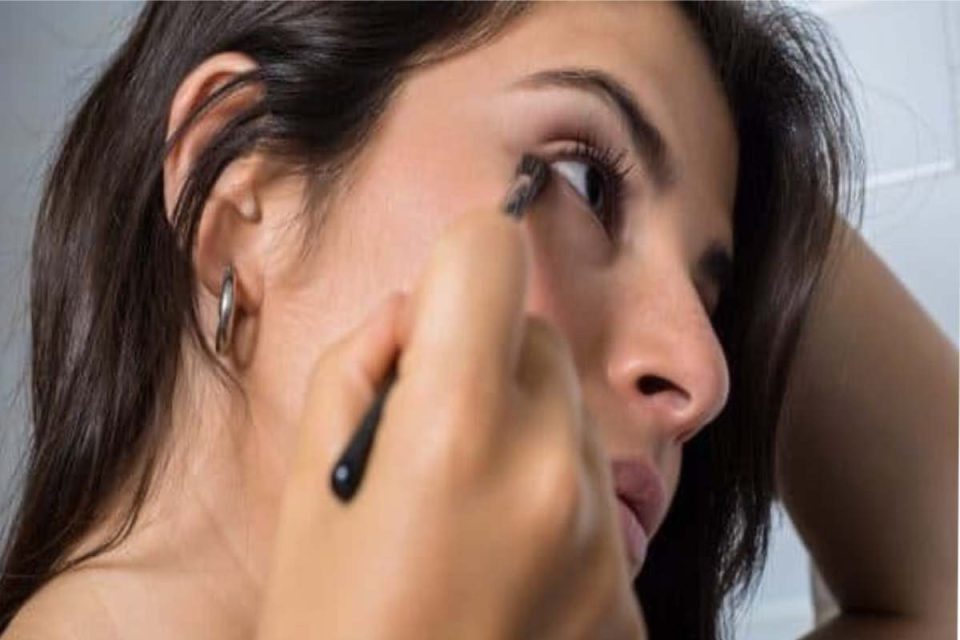
Sensitive eyes are not a single condition but a reactivity pattern driven by tear-film instability, nerve sensitivity, and environmental or chemical triggers. Understanding which pathway affects you allows targeted relief instead of generic “gentle care.”
If your eyes burn when you apply makeup, water during screen use, or feel irritated for no clear reason, the problem is usually not “just sensitivity.” It’s a mismatch between your eye’s protective system and your daily exposures. The direct answer: identify your sensitivity type and reduce the specific triggers overwhelming your tear film and nerve response. Once you treat the mechanism—not the symptom—relief becomes predictable.
Table of Contents
Who This Guide Is For
This article is for:
- People with recurring irritation, burning, or watery eyes.
- Beginners confused by conflicting advice.
- Professionals seeking a structured explanation to guide clients.
This is not for:
- Acute infections, severe pain, or sudden vision changes (those require medical care).
Guidance aligns with clinical perspectives commonly discussed by organizations such as the American Academy of Ophthalmology, which emphasize identifying underlying causes rather than self-treating blindly.
Why Sensitive Eyes Are Increasing Today
Modern lifestyles create constant low-grade stress on the eyes:
| Modern Factor | What It Does to Eyes | Long-Term Effect |
| Extended screen time | Reduces blink rate | Tear evaporation |
| Air-conditioned spaces | Removes moisture | Surface dryness |
| Urban pollution | Adds oxidative stress | Inflammation |
| Layered cosmetics/skincare | Increases chemical exposure | Barrier fatigue |
Sensitive eyes are often a design problem—our environment evolved faster than our biology.
The Biology Behind Eye Sensitivity
Your eye surface depends on a microscopic shield called the tear film.
| Tear Film Layer | Function | When It Fails |
| Lipid layer | Prevents evaporation | Eyes feel dry quickly |
| Water layer | Hydrates + flushes irritants | Burning sensation |
| Mucin layer | Keeps tears spread evenly | Patchy discomfort |
When disrupted, nerve endings become exposed—making normal stimuli feel irritating. Research directions supported by institutions like the National Institutes of Health show how inflammation and nerve signaling amplify this response.
The 4 Types of Sensitive Eyes
- Barrier-Deficient Type
- Feels dry even without visible redness.
- Worse in wind, AC, or long days.
- Allergic-Reactive Type
- Itching dominates.
- Triggered by seasons, dust, or pollution.
- Chemical-Sensitive Type
- Stings when trying new products.
- Reacts inconsistently to formulations.
- Digital-Strain Type
- Watery yet tired eyes during screen work.
- Improves away from devices.
| Type | Root Problem | Common Mistake | Correct Approach |
| Barrier | Moisture loss | Using random drops | Improve environment |
| Allergic | Immune trigger | Overusing cosmetics | Control exposure |
| Chemical | Ingredient overload | Constant product switching | Simplify routine |
| Digital | Blink suppression | Ignoring ergonomics | Retrain habits |
Hidden Triggers Most People Never Connect
Environmental
| Trigger | Why It Matters | Fix |
| Ceiling fans | Accelerate tear evaporation | Redirect airflow |
| Low humidity | Destabilizes tear layer | Add moisture indoors |
| Traffic pollution | Irritates ocular surface | Protective eyewear outdoors |
Behavioral
| Habit | Effect on Eyes | Adjustment |
| Rubbing eyes | Micro-inflammation | Use cold compress instead |
| Poor sleep | Slower repair cycle | Stabilize sleep rhythm |
| Skipping breaks | Tear stagnation | Structured pauses |
Product-Related
| Product Feature | Risk Mechanism | Safer Direction |
| Heavy fragrance | Volatile irritation | Minimal formulas |
| Loose powders | Particle migration | Pressed textures |
| Waterproof removers | Residue stress | Gentle cleansing |
How to Identify Your Pattern
| Your Main Symptom | Likely Driver | First Change to Try |
| Dry + tired | Barrier issue | Reduce airflow exposure |
| Watery at laptop | Digital strain | Enforce blink breaks |
| Burns with products | Chemical load | Simplify routine |
| Itchy seasonally | Allergic response | Limit environmental triggers |
This diagnostic approach mirrors prevention models promoted in global public-health discussions from the World Health Organization emphasizing environmental modification before intervention.
Smart Relief Strategies That Actually Work
Step 1: Stabilize the Environment
| Adjustment | Why It Works |
| Indirect airflow | Prevents tear loss |
| Regular blinking | Recoats eye surface |
| Hydration | Supports tear production |
Step 2: Reduce Input Overload
Instead of chasing “hypoallergenic” labels, reduce the number of exposures.
| Old Approach | Better Approach |
| Trying many new products | Use fewer, consistent ones |
| Switching weekly | Test changes slowly |
| Layering treatments | Minimal routine |
Step 3: Build a Low-Stress Eye Routine
| Stage | Goal | Key Principle |
| Cleanse | Remove irritants | No residue |
| Support | Maintain hydration | Light layers |
| Protect | Prevent recurrence | Environmental control |
Makeup & Skincare Compatibility Guide
| Category | Eye-Friendly Choice | Why |
| Eyeliner | Cream-based | Less particle fallout |
| Mascara | Tubing formulas | Reduced flaking |
| Shadow | Pressed textures | Controlled application |
The issue is mechanical migration—not whether a product is labeled “clean.”
revention: The Long-Term Fix Most Articles Ignore
Sensitive eyes improve when daily stress decreases consistently.
| Preventive Habit | Biological Benefit |
| 20-20 visual breaks | Restores blinking rhythm |
| Controlled indoor air | Preserves tear layer |
| Consistent routines | Lowers inflammatory load |
Think of this like physical training—you’re rebuilding tolerance.
When to Seek Medical Evaluation
Self-care is appropriate for functional sensitivity.
Professional evaluation is needed if you notice:
- Persistent pain
- Light sensitivity
- Sudden vision fluctuation
- Symptoms that worsen despite simplification
Quick Reference: Trigger → Mechanism → Solution
| Trigger | Mechanism | Solution |
| Screens | Reduced blinking | Structured breaks |
| Dry air | Evaporation | Environmental balance |
| Cosmetic overload | Chemical exposure | Routine simplification |
Conclusion
Sensitive eyes are not random, and they are not inevitable. They are a response pattern—one that can be understood, mapped, and corrected. When you stop treating sensitivity like a mystery and start treating it like a system under strain, relief becomes structured, repeatable, and sustainable.
Frequently Asked Questions
Can sensitive eyes be cured permanently?
They can be significantly improved by stabilizing the tear environment and reducing triggers.
Are “natural” products always better?
No. Natural ingredients can irritate just as easily as synthetic ones.
Why do my eyes water if they’re actually dry?
That’s a reflex response to surface stress—watering doesn’t mean adequate lubrication.
Does screen time permanently damage eyes?
Not usually, but it disrupts blinking patterns, creating chronic irritation if unmanaged.