


You’ve tried everything — more sleep, better nutrition, expensive supplements, even meditation. Yet every afternoon, the same heavy fog settles over your brain and your limbs feel like lead.
What if the culprit isn’t your lifestyle, but the walls around you?
A growing body of research shows that interior design styles directly impact human energy levels. The phenomenon is called Sick Building Syndrome (SBS) — a cluster of symptoms including fatigue, headaches, dizziness, and poor concentration that appear inside a specific building and improve when you leave. And your home can be just as draining as any office.
This is especially relevant in the Russian Federation, where long winters, standardized Soviet-era layouts, and a recent wave of “euro-renovation” have created unique fatigue challenges. But the good news? The right interior design choices can reverse the damage — and the latest 2026 trends in Russian design are finally moving in a healthier direction.
This guide is your complete symptoms + causes + treatment roadmap. We’ll help you diagnose whether your home is making you tired, understand why certain design choices drain your energy, and give you a practical, affordable plan to reclaim your vitality — one room at a time.
Table of Contents
Part 1: Symptoms — Is Your Home Making You Tired?
Before you change a single light bulb or throw out your sofa, you need to know what you’re looking for. Fatigue from interior design rarely announces itself as “I hate this room.” Instead, it shows up as subtle, persistent symptoms you might blame on work, stress, or aging.
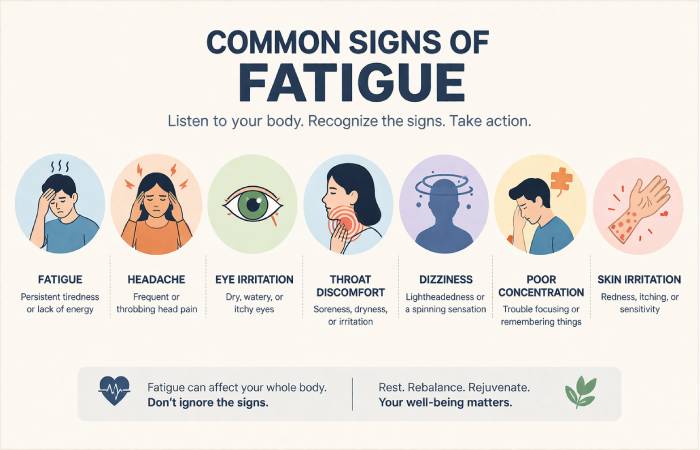
The 7 Most Common Symptoms of Design‑Induced Fatigue
| Symptom | What It Feels Like | Most Likely Design Culprit |
| Morning brain fog | Waking up groggy, needing 2+ hours to feel alert | Poor bedroom ventilation + elevated CO₂ levels |
| Mid‑afternoon crash | Overwhelming tiredness between 2‑4 PM | Lack of natural light + blue light deficit |
| Eye strain & headaches | Heavy eyelids, throbbing temples | Harsh overhead lighting + screen glare |
| Restless sleep | Tossing and turning, waking up stiff | Old mattress + disruptive colors (e.g., bright yellow) |
| Low motivation | No desire to cook, clean, or socialize | Monotonous gray/white minimalism + absence of personal warmth |
| Irritability | Snapping at family for no reason | Chaotic maximalism + visual noise + poor spatial flow |
| Physical heaviness | Limbs feel like lead, even after sitting | VOCs from synthetic furniture + poor air quality |
Sick Building Syndrome symptoms extend beyond fatigue. According to the NHS and other health authorities, you may also experience:
- Irritation of the eyes, nose, or throat
- Dry cough and dry, itchy skin
- Dizziness and nausea
- Difficulty concentrating
- Sensitivity to odors
The “Leaving the House” Test
Here’s a simple diagnostic you can do right now:
Do your symptoms improve within 30–60 minutes after you leave your home?
If yes, your home is very likely contributing to your fatigue. This is the hallmark of Sick Building Syndrome — symptoms that resolve when you exit the building.
Real‑life example:
Olga, 42, from Yekaterinburg, spent two years believing she had chronic fatigue syndrome. She tried supplements, sleep tracking, and even a sleep study — all normal. The turning point came during a week‑long holiday in Sochi. “By day three, I felt like a different person,” she says. “More energy, clearer thinking, less joint pain.” Back home, the symptoms returned within 48 hours. The culprit? Her newly renovated apartment’s sealed windows, synthetic laminate flooring, and lack of ventilation were trapping volatile organic compounds (VOCs) that directly cause fatigue and cognitive impairment.
Part 2: Causes — How Interior Design Drains Your Energy
Now let’s move from symptoms to root causes. Understanding the why is essential before we discuss the treatment plan.
Cause #1: Poor Lighting
Light is the single most powerful environmental factor affecting human energy. Your body’s circadian rhythm — the internal clock that tells you when to wake up and when to sleep — is regulated by light exposure.
The problem in Russian homes:
Russia has long, dark winters. In cities like St. Petersburg, December brings as little as 5‑6 hours of daylight. Many Russian apartments compensate with:
- Harsh, cool‑white LED overhead lights (5000K+)
- Small, single‑glazed windows that block natural light
- Heavy curtains kept closed for privacy
The result: Your brain never gets the “wake up” signal. Melatonin (the sleep hormone) stays elevated during the day, while cortisol (the energy hormone) stays low. The outcome? Daytime fatigue and poor sleep at night.
Research shows that exposure to blue light (common in many LEDs) suppresses melatonin for roughly twice as long as green light, disrupting your natural sleep-wake cycle. Overhead lights — especially cold, fluorescent ones — can be harsh on the eyes and draining over time.
The solution: Human‑centric lighting designed around people, not just rooms. During the day, brighter, cooler light (around 3500K–4000K) tells your brain, “Stay alert.” In the evening, softer, warmer light (around 2700K–3000K) signals, “Wind down”.
Cause #2: Toxic Materials & Off‑Gassing
Your new sofa, laminate flooring, or painted walls may be quietly poisoning you.
Many synthetic building materials release Volatile Organic Compounds (VOCs) — chemicals that evaporate into the air at room temperature. Common sources include:
- Laminate flooring (formaldehyde)
- Synthetic carpets (styrene, benzene)
- Painted walls (low‑quality acrylics)
- Pressed‑wood furniture (formaldehyde resins)
The symptom connection: VOCs directly cause fatigue, headaches, dizziness, and cognitive impairment. Inadequate ventilation and chemical contaminants from indoor sources are major contributors to Sick Building Syndrome.
Russian context:
The Russian renovation boom has led to widespread use of affordable synthetic materials. “Euro‑renovation” (evroremont) — characterized by white walls, glossy finishes, and laminate floors — is now the #1 anti‑trend of 2026 because designers recognize it creates cold, unhealthy spaces.
Key insight: The “evroremont” style emerged in the 1990s as Russians embraced Western interior design trends. But what once symbolized modernity is now recognized as a significant contributor to indoor air pollution and fatigue.
Cause #3: Clutter & Visual Noise (Mental Fatigue Accelerator)
Your brain processes visual information constantly, even when you’re not actively looking. A cluttered environment forces your brain to work harder, leading to decision fatigue and mental exhaustion.
Clutter, cramped conditions, and poor spatial flow can trigger psychological distress, leading directly to fatigue symptoms.
Russian context:
Traditional Russian interiors often embrace maximalism — layered patterns, abundant decor, and sentimental objects collected over generations. While cozy (the famous uteplyenie or “warming” concept), excessive visual complexity can overwhelm sensitive individuals.
The sweet spot: Soft minimalism or Japandi (Japanese + Scandinavian) — clean lines with warm textures, natural materials, and curated personal objects. This approach reduces visual noise without creating emotional emptiness.
Cause #4: Wrong Color Schemes (The Mood Manipulator)
Color psychology is not a gimmick — it’s neuroscience. Different wavelengths of light trigger different hormonal responses.
The most tiring color: According to color psychologists, bright yellow is considered the most tiring and fatiguing color, especially when applied to large areas. Yellow can be overwhelming or anxiety‑inducing in large amounts, particularly if you’re already stressed.
| Color | Psychological Effect | Best Used In | Avoid In |
| Red | Increases energy, blood pressure, heart rate | Dining rooms, entryways | Bedrooms, relaxation spaces |
| Orange | Stimulating, increases appetite | Exercise rooms, kitchens | Bedrooms |
| Yellow | Uplifting in small doses; overwhelming in large amounts | Accent walls, small decor | Large walls, bedrooms |
| Green | Calming, restful | Any room | N/A |
| Blue | Soothing, lowers heart rate | Bedrooms, bathrooms | Workspaces (can be too calming) |
Russian context:
Fortunately, Russian design is shifting away from cold grays and whites toward warmer, more restorative colors. Popular shades for 2026 include terracotta, ocher, mustard, warm beige, and chocolate and caramel tones. Soft gray‑beige (“greige”) is replacing traditional gray, and warm white tones (milky, creamy) are replacing stark white.
Part 3: Why This Matters Now — The 2026 Shift in Russian Design
The Russian interior design market is undergoing a significant transformation. In 2026, demand for interior design services in Russia has grown by 12% year‑over‑year. This surge is driven by a fundamental shift in priorities: Russians are moving from “just renovating” to intentionally creating spaces that support their wellbeing.
Key 2026 Trends in Russian Design
| Trend | Description | Why It Helps Fatigue |
| Biophilic design | Integrating nature through plants, natural materials, and natural light | Reduces stress, improves air quality, restores mental energy |
| Warm minimalism | Minimalism with warm colors, natural textures, and rounded forms | Reduces visual noise without feeling cold or sterile |
| Bio‑based materials | Wood, stone, cork, rattan, and recycled surfaces | Eliminates VOCs, improves indoor air quality |
| “Cocoon” effect | Using one texture or color on ceilings and walls | Minimizes peripheral distractions, allows brain to focus |
| Personalized interiors | Spaces that tell a personal story rather than copying Pinterest | Creates emotional connection and reduces psychological stress |
What’s Out (and Why It’s Good for Your Health)
The infamous “euro‑renovation” style — with its cold gray‑white walls, glossy finishes, and anonymous furniture — is now the #1 anti‑trend of 2026. Designers report that these cold, monochrome spaces with perfect lines look outdated and lifeless.
Also falling out of favor:
- Industrial style with chrome and metal details (replaced by matte black metal and dark bronze)
- Sharp, straight lines and angles (replaced by soft, rounded forms)
- Mass‑produced, anonymous furniture (replaced by artisanal and vintage pieces)
Part 4: Treatment Plan — A Room‑by‑Room Guide to Fighting Fatigue
Now for the actionable part. Here’s how to transform each room in your home into an energy‑restoring sanctuary.
Bedroom: The Non‑Negotiable Recovery Zone
| Problem | Solution | Difficulty (1‑5) |
| Old, unsupportive mattress | Replace every 7‑8 years; choose medium‑firm for spinal alignment | $$$ |
| Harsh overhead light | Add dimmer switches; use table lamps with warm bulbs (2700K) | $ |
| Bright or cool colors | Repaint in soft blues, muted greens, warm beiges, or creamy whites | $$ |
| Poor air circulation | Open windows daily (even in winter for 5‑10 minutes); add air‑purifying plants | $ |
| Electronic clutter | Remove TVs, computers, and phones; create a “charging station” outside the room | Free |
Quick win: Invest in blackout curtains to block early‑morning light, but keep them open during the day to let natural light signal your body to wake up.
Living Room: The Social & Recovery Hub
| Problem | Solution | Difficulty |
| Single harsh overhead light | Create layered lighting: ambient (overhead dimmable), task (reading lamps), accent (art lights) | $$ |
| Synthetic sofa off‑gassing | If replacement isn’t possible, add an air purifier with activated carbon filter | $$ |
| Visual chaos | Declutter surfaces; use closed storage for items not on display; limit patterns to 2‑3 per room | Free |
| Cold, sterile colors | Add warmth through textiles (throws, cushions, rugs) in terracotta, mustard, or olive | $ |
Quick win: Bring in 3‑5 indoor plants. Research from the University of Technology Sydney suggests indoor plants can reduce feelings of fatigue by up to 38%.
Home Office
| Problem | Solution | Difficulty |
| Poor ergonomics | Invest in an ergonomic chair; position screen at eye level; use a separate keyboard | $$$ |
| Inadequate task lighting | Add a desk lamp with adjustable brightness and color temperature (3500K‑4000K for daytime) | $ |
| Windowless room | Use a light therapy lamp for 20‑30 minutes each morning | $$ |
| Noise distractions | Add acoustic panels, a white noise machine, or noise‑canceling headphones | $$ |
Quick win: Position your desk perpendicular to a window (not facing it directly) to reduce glare while maintaining natural light exposure.
Bathroom: The Often‑Overlooked Detox Space
| Problem | Solution | Difficulty |
| Mold and dampness | Install an exhaust fan; wipe down wet surfaces; check for leaks | $$ |
| Harsh fluorescent lighting | Replace with warm LED bulbs (2700K‑3000K) on a dimmer | $ |
| Chemical cleaning products | Switch to natural alternatives (vinegar, baking soda, castile soap) | $ |
| Poor ventilation | Keep the door slightly ajar after showers; open windows when possible | Free |
Kitchen: The Energy Source
| Problem | Solution | Difficulty |
| Poor task lighting | Add under‑cabinet lighting for food prep areas | $$ |
| Cluttered countertops | Store appliances away when not in use; use vertical storage | Free |
| Synthetic cookware | Replace non‑stick pans (which can off‑gas) with stainless steel, cast iron, or ceramic | $$ |
| Strong artificial fragrances | Avoid synthetic air fresheners; use natural ventilation or simmer herbs/spices instead | Free |
Part 5: Quick Summary Table — Your Fatigue‑Fighting Cheat Sheet
| Design Element | Fatigue Culprit | Fatigue Fighter |
| Lighting | Single harsh overhead light; blue light at night | Layered lighting; warm bulbs (2700K) in evenings; daylight bulbs (5000K) for task areas |
| Materials | Synthetic carpets, laminate flooring, pressed wood | Solid wood, natural stone, low‑VOC paints, organic textiles |
| Color | Bright yellow walls; cold gray/white everywhere | Warm beiges, terracotta, olive green, soft blues |
| Layout | Cramped, cluttered, chaotic | Open flow; designated zones for different activities |
| Air quality | Sealed windows; lack of ventilation | Daily fresh air; air‑purifying plants; HEPA air purifier |
| Nature connection | No plants; no natural textures | Indoor plants; wooden furniture; natural light |
| Personalization | Sterile, “showroom” feel | Meaningful objects; personal photos; items with stories |
Part 6: Common Mistakes — What NOT to Do
- Going to extremes. A completely sterile, minimalist white box can be just as draining as a chaotic maximalist space. Aim for balance.
- Ignoring the “off‑gassing” period. New furniture and renovations release the highest levels of VOCs in the first few weeks. If you renovate, allow time for materials to off‑gas before moving back in.
- Using air fresheners to mask odors. Scented candles and plug‑ins add more VOCs to your indoor air, compounding the problem rather than solving it.
- Relying on a single light source. Even the most beautiful room becomes fatiguing if you can’t adjust the lighting for different activities and times of day.
- Keeping curtains closed all day. Natural light is your body’s primary timekeeper. Even on cloudy Russian winter days, letting in natural light helps regulate your circadian rhythm.
Part 7: When to Worry — The Red Line
Interior design changes can dramatically improve fatigue caused by your environment. However, fatigue can also signal serious medical conditions. Consult a doctor immediately if your fatigue is accompanied by:
- Shortness of breath with minimal exertion (e.g., climbing one flight of stairs)
- Unexplained weight loss
- Chest pain or irregular heartbeat
- Severe muscle weakness or numbness
- Persistent fever or night sweats
- Thoughts of self‑harm
Do not rely on design changes alone if you experience any of these symptoms. Your health always comes first.
Part 8: Who This Article Is For
This article is for:
- Adults in the Russian Federation who feel tired despite adequate sleep and a healthy lifestyle
- Anyone who notices their fatigue improves when they leave their home
- Homeowners and renters looking for affordable, actionable design changes
- People who want to understand the connection between their environment and their energy
This article is NOT for:
- Individuals with diagnosed medical conditions causing fatigue (consult your doctor first)
- Anyone experiencing emergency symptoms (chest pain, suicidal thoughts, sudden paralysis)
- Those seeking a replacement for medical advice — interior design complements medical care but does not replace it
FAQs
Q: Can interior design really cause fatigue, or is this exaggerated?
A: Yes, it’s well documented. Sick Building Syndrome is a recognized phenomenon in which building occupants experience fatigue, headaches, and other symptoms that improve when they leave the building. Poor lighting, VOCs, inadequate ventilation, and visual clutter are all scientifically linked to fatigue.
Q: What’s the single fastest change I can make to reduce fatigue at home?
A: Change your lighting. Replace harsh overhead bulbs with dimmable, warm‑white (2700K‑3000K) bulbs in living areas and bedrooms. Add task lighting for activities that require focus. This one change can significantly reduce eye strain and support your natural sleep‑wake cycle.
Q: Are indoor plants really effective against fatigue?
A: Yes. Research from the University of Technology Sydney found that indoor plants can reduce feelings of fatigue by up to 38%. Plants also improve air quality by absorbing VOCs and increasing oxygen levels.
Q: What colors should I avoid in my bedroom?
A: Avoid bright yellows, intense reds, and stark whites in bedrooms. These colors are stimulating and can interfere with sleep. Instead, choose soft blues, muted greens, warm beiges, or creamy whites.
Q: How often should I replace my mattress to prevent fatigue?
A: The Sleep Council recommends changing your mattress every seven to eight years. An old or unsupportive mattress can cause poor sleep quality, leaving you stiff and tired even after a full night in bed.
Conclusion
Your home should be your sanctuary — a place that restores your energy, not drains it. Yet for millions of adults in the Russian Federation, the opposite is true. Poorly chosen interior design styles — from harsh lighting and toxic materials to visual clutter and the wrong color schemes — are quietly contributing to a silent epidemic of fatigue.
The good news is that you have the power to change it. By understanding the connection between your environment and your energy, you can make informed choices that transform your home into a true wellness sanctuary. Start small: change a light bulb, add a plant, open a window, declutter a surface. Each change moves you closer to a home that supports your health rather than undermining it.
And remember: while design can dramatically improve environmental fatigue, it is not a substitute for medical care. If your fatigue is severe or accompanied by other concerning symptoms, consult a healthcare professional.
Your home is waiting to heal you. It’s time to let it.