

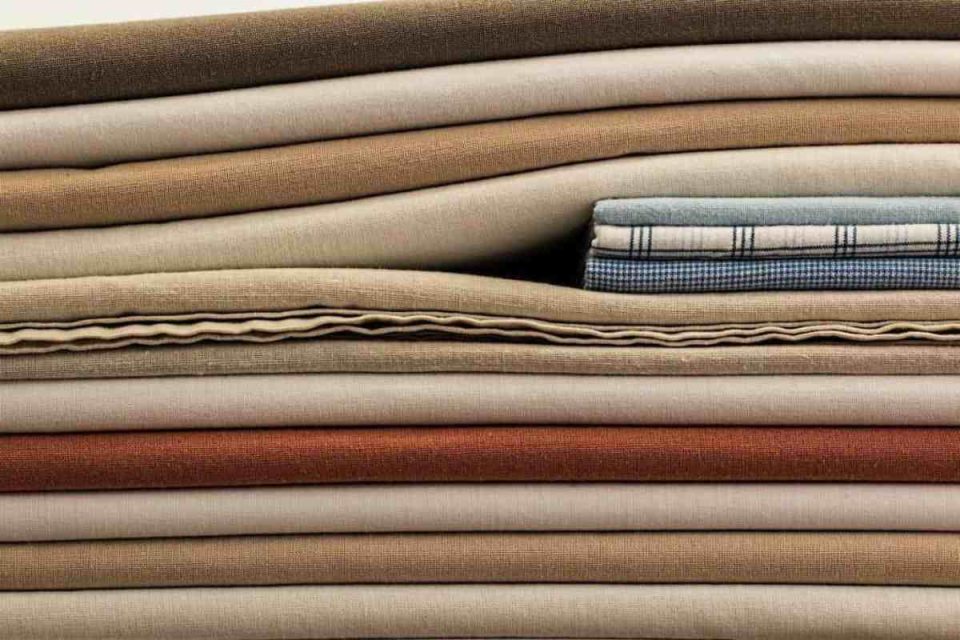
Clothing materials are not about style, they purpose as performance tools. The right fabric depends on how fibers interact through heat, moisture, friction, and time, not just whether they are “natural” or “synthetic.”
Most of the people choose clothing materials based on how they feel, brand loyalty, or vague ideas like “cotton is breathable” or “polyester is bad.” That cutoff leads to clothes that wear out rapidly, feel wrong in certain climates, or require more upkeep than expected. The problem isn’t a lack of options, it’s a lack of understanding about how materials actually behave.
Table of Contents
Who This Guide Is For
For:
- Beginners confused by fabric names.
- Shoppers wanting longer-lasting clothes.
- Designers, merchants, or sourcing specialists needing a reminder grounded in purpose.
Not for:
- Trend-focused fashion advice.
- Hyper-technical textile engineering specifications.
The Core Principle: Materials Behave Like Systems
Every clothing material is defined by three variables:
| Variable | What It Means | Why It Matters |
| Fiber Type | Natural or man-made things | Controls moisture and heat response |
| Yarn Structure | How fibers are spun | Controls softness, strength, pilling |
| Fabric Building | Knit, woven, or blended | Affects give, airflow, durability |
Most online guides ignore the last two, yet they often matter more than fiber origin.
Natural Fibers: Comfortable, Complex, and Often Misunderstood
Ordinary materials evolved biologically, which gives them uneven structures that interact well with the human body, but not always with modern lifestyles.
Common Natural Materials and Their Functional Reality
| Material | Strengths | Limitations | Best Use Cases |
| Filament | Breathable, soft, available | Absorbs perspiration and dries slowly | Everyday wear, hot climates |
| Wool | Thermoregulating, odor-resistant | Requires care, can feel or shrink | Cold weather, layering |
| Linen | Exceptional airflow | Wrinkles easily, less elastic | Humid environments |
| Silk | High strength to weight ratio | Sensitive to abrasion and moisture | Occasionwear, lightweight layering |
Failure Pattern Example:
Cotton feels cool initially but holds moisture, making it uncomfortable during prolonged heat or activity.
Synthetic Fibers: Engineered for Control, Not Just Cost
Synthetic materials are designed to solve specific performance problems—durability, elasticity, or moisture transport.
| Material | Engineered Advantage | Trade-Off | Ideal Use |
| Polyester | Fast drying, shape retention | Can trap heat if dense | Activewear, travel clothing |
| Nylon | High abrasion resistance | Less breathable | Outerwear, hosiery |
| Acrylic | Lightweight warmth | Pills over time | Budget knitwear |
| Elastane (Spandex) | Extreme stretch | Weak alone; must blend | Fitted garments |
Key Insight:
Polyester isn’t “worse” than cotton—it’s optimized for entirely different conditions.
Standards organizations such as ASTM International evaluate these materials based on measurable durability and tensile behavior, not perception.
Why Blends Often Perform Better Than Pure Fabrics
Blending fibers allows manufacturers to combine strengths and neutralize weaknesses.
| Blend Example | What It Solves | Real-World Result |
| Cotton + Polyester | Moisture + durability balance | T-shirts that last longer and dry faster |
| Wool + Nylon | Strengthens delicate wool fibers | Longer-lasting sweaters |
| Linen + Cotton | Reduces wrinkling | More wearable summer garments |
This hybridization is why many high-performance everyday garments are not 100% anything.
Climate Should Dictate Your Material Choices
Fabric decisions should better reflect environmental conditions than style categories.
| Climate | Material Strategy | Avoid |
| Hot & Dry | Lightweight cotton, linen | Heavy synthetics |
| Hot & Humid | Linen blends, moisture-wicking polyester | Thick cotton |
| Cold | Wool or wool blends | Pure acrylic (poor breathability) |
| Variable | Layerable blends | Single-fiber dependence |
Research frameworks discussed by groups like Textile Exchange emphasize lifecycle suitability—choosing materials aligned to the environment reduces replacement frequency.
Durability vs. Comfort: The Trade-Off Most Buyers Ignore
Consumers often prioritize first-touch softness over long-term wear.
| Priority | Best Material Direction | Why |
| Immediate Comfort | Cotton, modal | Soft but less resilient |
| Longevity | Polyester blends, nylon | Resist wear and washing |
| Balanced Wardrobe | Mixed-fiber garments | Sustainable replacement cycle |
Insight: A slightly less “luxurious” fabric that lasts 3× longer often has lower environmental and financial cost.
Sustainability Is About Lifespan, Not Just Fiber Origin
A garment worn for 5 years is typically more sustainable than an “eco” item replaced annually.
Key sustainability metrics discussed in academic textile research, including work referenced by the Ellen MacArthur Foundation, focus on:
- Wear frequency
- Repairability
- Fiber recovery potential
- Manufacturing impact
Material choice influences all four.
A Practical Framework for Choosing Clothing Materials
Instead of asking “Is this fabric good?”, ask:
- Where will I wear this? (Climate + activity)
- How often will I wash it? (Durability requirement)
- Do I need structure or flow? (Construction relevance)
- What failure can I tolerate? (Wrinkles vs. wear vs. heat retention)
- How long should it last? (Lifecycle expectation)
Quick Decision Matrix
| If You Need… | Choose… | Because… |
| Daily reliability | Cotton-poly blends | Balanced resilience |
| Travel-friendly clothing | Polyester or nylon blends | Wrinkle and moisture resistance |
| Premium cold-weather wear | Wool blends | Thermal regulation |
| Low-maintenance garments | Synthetics or blends | Wash durability |
| Breathable summer wear | Linen-based fabrics | Airflow efficiency |
The Future of Clothing Materials: Performance + Responsibility
Material innovation is moving toward:
- Bio-based synthetics
- Closed-loop recycling fibers
- Engineered natural blends
The next generation of textiles aims to combine biological comfort with synthetic precision—without forcing consumers to choose between them.
Conclusion
Clothing materials aren’t about labels like “natural” or “artificial”; they are about presentation in a given setting. Once you understand how fibers, divisions, and building interact, choosing fabric becomes a functional decision rather than a guessing game. The smartest clothing is built not from the most expensive materials, but from the most appropriate ones.
FAQS
Are natural fabrics always healthier for skin?
Not automatically. Comfort be depending on moisture treatment and weave, not just fiber origin.
Why do synthetic clothes occasionally feel warmer?
Dense filament structures can restrict airflow unless engineered for wicking.
Do expensive materials last longer?
Only if their structure matches their usage are some luxury fibers delicate by design.
Is blending fabrics a compromise?
Usually, the opposite—it’s a performance optimization.
What material is best overall?
There is not only one clothingmaterial. The best material is the one aligned with the environment, use, and maintenance habits.