

Table of Contents
Nails: The Science-Backed Guide to Stronger Growth
Healthy nails come from managing hydration, protection, and growth—not from cosmetic products. Treat nails like a structural tissue system, and strength becomes the natural result.
Most people searching for nail care want one thing: stronger nails that don’t peel, split, or break.
The direct answer for nails is simple—nails improve when you reduce water damage, control mechanical stress, and support natural regrowth. Products are effective only after those three factors are addressed.
The Problem–Agitation–Solution
Problem: You’ve tried oils, strengtheners, supplements, or salon treatments, yet your nails still feel weak.
Agitation: That’s because most advice treats nails as beauty features instead of biological structures. When the underlying mechanics are ignored, every solution becomes temporary.
Solution: Understand how nails behave like layered materials. Once you manage hydration and stress the way dermatology and cosmetic science recommend, nails become naturally durable—with or without polish.
Key Takeaways
-
Nail strength depends on flexibility, not hardness.
-
Repeated water exposure is the leading cause of peeling nails.
-
Filing technique and nail shape are more likely to cause breakage than most treatments.
-
Oils maintain structural cohesion, not just surface shine.
-
Real improvement follows the nail growth cycle (8–12 weeks).
-
Prevention habits outperform corrective products.
Who This Guide Is For (And Who It’s Not)
This is for:
-
Beginners are confused by conflicting nail advice.
-
People whose nails peel despite “doing everything right.”
-
Professionals or enthusiasts wanting a structural understanding of nail care.
This is not for:
-
Trend-driven manicure inspiration.
-
Quick cosmetic hacks without long-term change.
What Nails Actually Are (And Why That Changes Everything)
Nails are made of compressed keratin cells produced in the nail matrix, the growth zone hidden under the cuticle. The visible nail is already non-living tissue.
This explains two critical realities:
-
You cannot “repair” existing nail—only protect it while the new nail grows.
-
The damage observed today often began weeks earlier.
Organizations like the American Academy of Dermatology (AAD) emphasize this growth-based model when addressing brittle nails.
The Real Causes of Weak or Peeling Nails
Water: The Most Overlooked Cause of Damage
Nails absorb water easily. Each wet–dry cycle causes expansion and contraction that separates keratin layers.
Think of it like repeatedly bending cardboard—it delaminates.
Common triggers:
-
Dishwashing without gloves
-
Long soaking before manicures
-
Frequent handwashing without reconditioning
Mechanical Stress: Daily Micro-Trauma
Everyday actions—opening cans, typing aggressively, clipping nails—create tiny fractures that spread over time.
Over-Hardening Treatments
Some nail “strengtheners” increase rigidity, making nails snap instead of flex. The British Association of Dermatologists notes brittleness often comes from loss of flexibility, not weakness.
Flexibility Is Strength: A Materials Science Perspective
Healthy nails behave like engineered composites.
| Property | Brittle Nails | Healthy Nails |
|---|---|---|
| Rigidity | Very high | Moderate |
| Flexibility | Low | Controlled |
| Break Pattern | Sudden cracks | Gradual wear |
| Durability | Short-term | Long-term |
You don’t want nails to be harder. You want them to absorb stress without fracturing.
The Evidence-Based Nail Care Framework
1. Manage Hydration, Don’t Eliminate It
Nails need balanced moisture—not saturation.
Best practice:
-
Apply penetrating oils after washing hands.
-
Wear gloves during prolonged water exposure.
Research in cosmetic chemistry (e.g., studies published in the Journal of Cosmetic Science) indicates that small-molecule oils can diffuse between keratin layers, reducing brittleness.
2. File—Don’t Clip
Clipping creates sharp stress points. Filing smooths edges and distributes force.
| Method | Structural Effect | Recommended? |
|---|---|---|
| Clipping | Microcracks | Rarely |
| Coarse filing | Edge damage | Avoid |
| Fine filing | Smooth stress distribution | Yes |
3. Shape Determines Durability
| Nail Shape | Stress Distribution | Breakage Risk |
|---|---|---|
| Round | Even | Low |
| Squoval | Balanced | Low |
| Almond | Moderate | Medium |
| Square | Corner-focused | Higher |
4. Use Polish as Protection, Not Decoration
A thin coating slows water absorption and reduces wear. Even clear polish functions like a sealant.
This is why people often see improvement when wearing polish consistently—not because of chemicals, but because of barrier protection.
Nutrition: Support Growth, Don’t Expect Miracles
Nails grow about 3 mm per month. No supplement can override this biological speed unless there’s a deficiency.
Important contributors:
-
Protein → keratin production
-
Iron → prevents fragility
-
Zinc → tissue repair
The National Institutes of Health (NIH) notes that biotin supplementation only shows benefit when a deficiency exists.
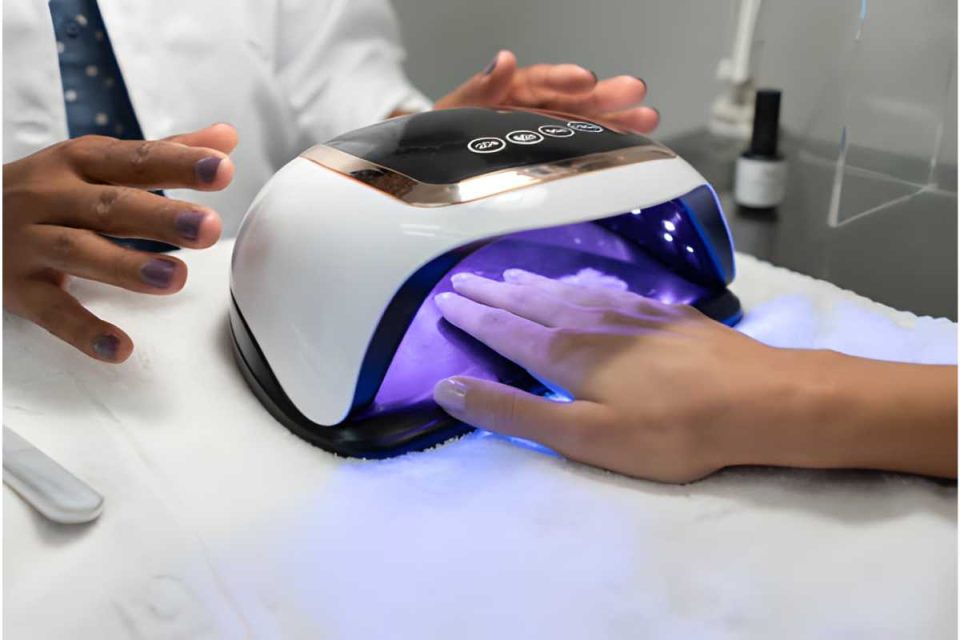
Salon Services: Not the Villain—Improper Removal Is
Enhancements damage nails primarily when:
-
They’re peeled off instead of dissolved.
-
Excessive filing thins the plate.
-
Nails aren’t rehydrated afterward.
A properly applied and removed gel manicure should leave the nail unchanged structurally.
Practical Routine by Experience Level
Beginner Routine
-
Oil after washing hands.
-
File weekly with fine grit.
-
Avoid soaking nails.
-
Keep nails at a manageable length.
Intermediate Routine
-
Maintain a consistent shape to prevent stress points.
-
Use a protective coating continuously.
-
Add weekly intensive conditioning.
Professional Mindset
Treat nails like load-bearing materials:
-
Reduce exposure cycles.
-
Maintain structural balance.
-
Allow uninterrupted regrowth.
How Long Does It Take to See Results?
Nails must grow out completely to show lasting improvement.
| Timeframe | What Changes |
|---|---|
| 2–3 Weeks | Reduced peeling |
| 4–6 Weeks | Stronger tips |
| 8–12 Weeks | Noticeable transformation |
(See chart above for a visual timeline of typical improvement.)
Activities That Cause the Most Nail Damage
The chart above compares common behaviors and their relative structural impact. The biggest contributors are repeated water exposure and peeling off enhancements—both far more damaging than polish use.
Signs Your Nails Are Actually Getting Healthier
Look for functional changes, not cosmetic ones:
-
Nails flex slightly without snapping.
-
Peeling becomes rare.
-
Growth appears smoother near the cuticle.
-
Breakage correlates with accidents, not daily life.
Regional / Regulatory Notes
-
Some countries restrict certain nail hardeners containing high formaldehyde levels due to brittleness risks.
-
Professional licensing standards for nail services vary (for example, U.S. state cosmetology boards vs. EU safety regulations), but safe removal practices are universally emphasized.
The Big Shift Most People Need to Make
Nail care is not about adding more—it’s about removing the causes of damage.
When you:
-
Limit swelling from water,
-
Prevent mechanical fractures, and
-
Let biology do its job,
You stop needing constant fixes.
Strong nails are not built in a salon or a bottle.
They’re built slowly, the same way they grow—cell by cell.