

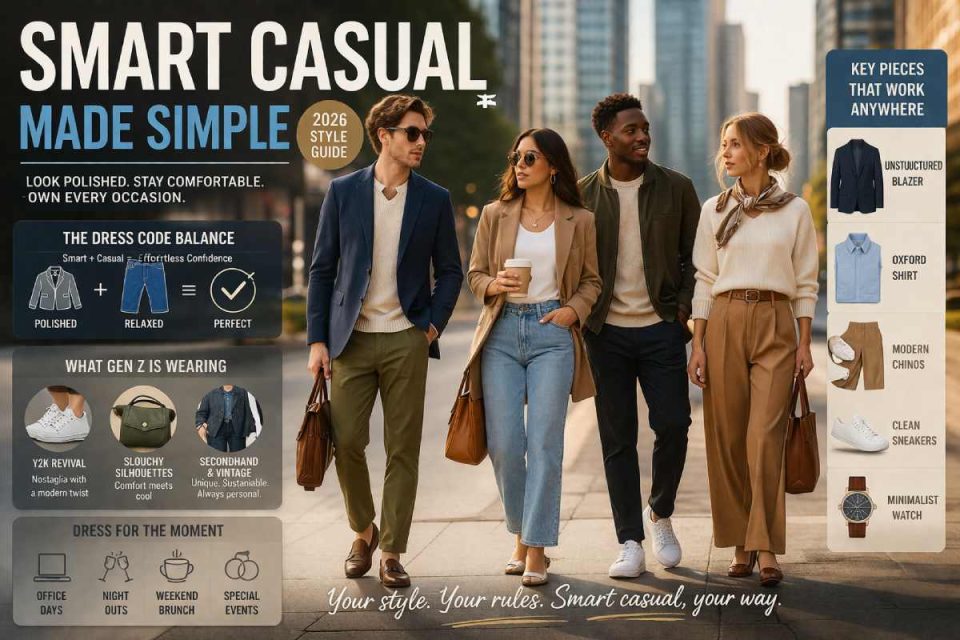
Imagine this: you have an important client dinner after work, followed by drinks with colleagues. The invitation says “smart casual,” and suddenly you are staring into your closet, unsure of what to wear. You are not alone. In the United States, smart casual remains one of the most misunderstood—and most requested—dress codes across corporate offices, social gatherings, and everything in between.
The term itself seems contradictory. How can something be both “smart” and “casual”? The answer lies in balance. Smart casual is not a rigid uniform but a flexible framework that combines polished, tailored pieces with relaxed, comfortable staples. Think of it as the sartorial sweet spot where you look intentional without looking like you tried too hard, and comfortable without appearing sloppy.
In 2026, as American workplaces continue to embrace hybrid models and social norms become increasingly relaxed, smart casual has evolved from a confusing dress code into a lifestyle. Whether you are navigating a tech start-up in Silicon Valley, a creative agency in New York, or a casual Friday in Chicago, this guide will help you decode the rules, build a versatile wardrobe, and dress with confidence for any occasion.
Table of Contents
What Exactly Is Smart Casual?
Smart casual sits on the dress code spectrum between business casual and pure casual. According to Mr Porter’s style advice, smart casual comprises “pretty much anything smarter than a tracksuit, but less formal than a suit”. Another simple definition: “Casual Plus Authority”—it allows for premium denim, high-end knitwear, and even clean sneakers, provided you balance them with a structured piece like a blazer.
The core philosophy of smart casual is polished relaxation. You want to combine something refined with something relaxed, creating an outfit that feels put-together but not stiff, comfortable but not careless. A tailored blazer with dark denim, a quality knit polo with chinos, or a crisp button-down worn untucked with clean sneakers—these are all examples of smart casual in action.
Importantly, smart casual is not simply “a shirt, tie, blazer, and jeans.” According to stylist Joe Ottaway, this is one of the biggest pitfalls to avoid. Instead, think of smart casual as a contemporary extension of your classic smart wardrobe, investing in a few staple pieces that offer maximum versatility.
Smart Casual Dress Code for Men – All You Need To Know
For men, smart casual can feel particularly confusing because the boundaries between “smart” and “casual” are often unclear. The table below breaks down exactly what works, what to avoid, and how to build a foolproof smart casual wardrobe.
| Category | What Works | What to Avoid | Pro Tips |
| Tops | Oxford cloth button-down shirts, premium polo shirts, fine-gauge knit sweaters, crisp white or light blue button-ups, high-quality plain T-shirts (under a blazer) | Graphic T-shirts, tank tops, heavily distressed or logo-heavy shirts, overly formal dress shirts with French cuffs | Fit is everything. A well-fitted shirt instantly looks sharper than an expensive but baggy one. Oxford cloth is more casual than poplin, making it ideal for smart casual. |
| Bottoms | Modern chinos (slim or straight-leg, in navy, olive, grey, or tan), dark indigo selvedge denim (no rips), tailored wool trousers, needlecord or flannel trousers | Baggy khakis, ripped or faded jeans, athletic sweatpants, shorts (unless specified for summer events), overly tight or sagging pants | Invest in one pair of high-quality dark jeans and two pairs of chinos in neutral colors. These three bottoms will cover 90% of smart casual occasions. |
| Jackets & Layers | Unstructured blazers or sport coats (soft shoulders, relaxed fit), knit blazers, smart bomber jackets, Harrington jackets, fine cardigans | Boxy suit jackets (too formal), puffy winter coats indoors, hoodies (unless layered very intentionally) | In 2026, unstructured blazers are the trend. They add visual polish without making you look overdressed. A jacket is not strictly required, but it elevates any outfit significantly. |
| Footwear | Leather loafers (penny or bit), suede desert boots, Chelsea boots, clean minimalist leather sneakers (white or black), brogues, Derbies | Athletic trainers (Nikes, Adidas), flip-flops, worn-out sneakers, overly shiny formal Oxfords (too stiff) | Your shoes should look intentional. Clean leather sneakers can work, but they must be spotless. Loafers are the safest bet for most settings. |
| Accessories | Leather belt (matching shoes), minimalist watch (leather strap or metal), structured messenger bag or leather backpack, quality socks (no-show or patterned, depending on shoes) | Oversized logos, flashy jewelry (thick chains, large buckles), novelty ties, baseball caps (unless very casual event) | Keep accessories understated and purposeful. A sleek leather belt and a minimal watch are all you need. |
Quick Men’s Outfit Formulas
- Office Smart Casual: Unstructured navy blazer + light blue Oxford button-down + olive chinos + brown leather loafers.
- Weekend Brunch: Premium white T-shirt (tucked or untucked) + dark selvedge jeans + clean white leather sneakers + optional cardigan.
- Date Night: Black knit polo + charcoal wool trousers + Chelsea boots + minimalist watch.
- Summer Event: Linen button-down (rolled sleeves) + tailored shorts (only if appropriate) + suede loafers.
What Is Gen Z Wearing Right Now?
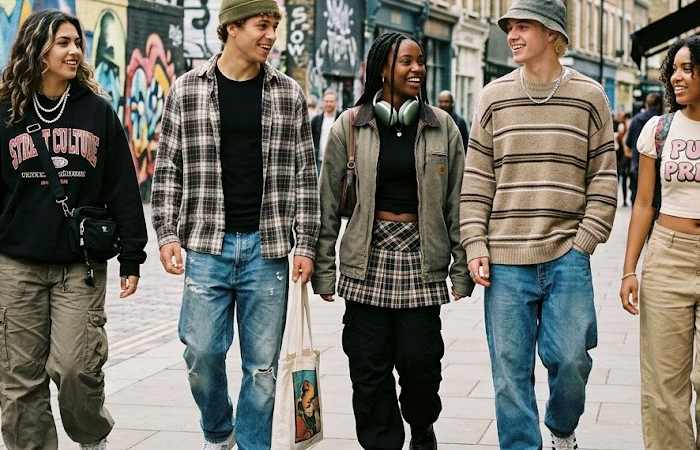
While smart casual is a staple for working professionals, Generation Z (born 1997–2012) is redefining casual style in the United States with a distinct blend of nostalgia, comfort, and individuality. Understanding these trends can help you adapt smart casual for younger audiences or simply stay current.
| Trend | What It Looks Like | Why Gen Z Loves It | Smart Casual Adaptation |
| Y2K Revival | Low-rise jeans, babydoll tops, pink accessories, chrome sunglasses, velvet tracksuits, large brand logos | Escape from digital fatigue and a longing for simpler times. Y2K acts as an “emotional anchor” amid social and economic instability. | Tone it down: swap low-rise jeans for mid-rise, pair a babydoll top with a structured blazer, or wear a velvet tracksuit jacket as a statement layer. |
| Slouchy Silhouettes | Off-the-shoulder tops, dropped waists, baggy power suits, slinky and draped fabrics, relaxed tailoring | A rebellion against millennial “cinched waists and tailored lines.” Slouchy feels effortless and authentic. | Balance is key. Pair a slouchy blazer with fitted trousers, or wear a baggy top with straight-leg jeans. Avoid going baggy head-to-toe in professional settings. |
| Secondhand & Vintage | Thrifted mini skirts, chunky sandals, vintage denim, pre-owned designer bags (e.g., Coach, Longchamp) | Environmental consciousness and a desire to be “curators” rather than consumers. Secondhand feels unique and personal. | Incorporate one vintage piece (e.g., a vintage blazer or leather belt) into an otherwise clean, modern outfit for character without chaos. |
| Comfort-First Footwear | Ugg slippers, Birkenstocks, chunky sneakers, comfortable shoes ranked as the most important item (73% of Gen Z agree) | Prioritizing physical comfort and all-day wearability over fashion pain. | Upgrade to “grown-up” comfort: Birkenstocks with socks? No. But clean, minimalist leather sneakers or modern clogs can work. |
| Niche Fastenings & Details | Chinese frog fastenings, toggle closures, military buttons, intricate hardware instead of simple zippers | A love for obscure references and hyper-fixations. Details feel intentional and personal. | Choose one accessory or garment with interesting hardware (e.g., a toggle coat, a unique belt buckle) and keep the rest minimal. |
| “Clean Girl” Elevated Basics | Structured tailoring, neutral palettes, tactile fabrics (linen, cotton, merino), understated luxury | A desire for emotional regulation through clothing. Simple, high-quality pieces provide calm and stability. | This aesthetic aligns perfectly with smart casual. Invest in quality basics—a cream knit, beige trousers, white sneakers—and you are already there. |
Gen Z Fashion Philosophy
Unlike millennials who followed trends from magazines and malls, Gen Z identifies as curators, reinterpreting inspiration from Pinterest, TikTok, and thrift stores. They embrace what older generations might call “cringe” (velvet tracksuits, logo sweatpants) and transform it into coolness. Their fashion choices are driven by intentionality, individuality, and sustainability—values that are increasingly influencing mainstream American style.
Smart Casual for Women
While the men’s table covers the essentials, women’s smart casual offers even more flexibility. Here are the key pieces every woman needs in her smart casual wardrobe:
The 7 Essential Wardrobe Pieces for Women
- A Well-Fitted Blazer – The single most transformative piece. A neutral blazer (black, navy, camel) instantly elevates jeans, dresses, or trousers.
- Dark-Wash or Straight-Leg Jeans – No rips, no fading. Dark denim reads as polished.
- Tailored Trousers – High-waisted, pleated, or wide-leg. Choose black, beige, or grey.
- Elevated Tops – Silk blouses, structured knits, crisp button-downs, fine-gauge sweaters.
- Midi or Knee-Length Dresses – Simple silhouettes in quality fabrics. Add a blazer for cooler days.
- Quality Knitwear – Cashmere or merino wool sweaters, cardigans, turtlenecks.
- Versatile Footwear – Loafers, ballet flats, clean leather sneakers, ankle boots with a modest heel.
Foolproof Outfit Formulas for Women
- One Elevated + One Relaxed: Silk blouse + tailored trousers + ballet flats.
- The Blazer Trick: Blazer + white T-shirt + dark jeans + loafers.
- The Dress Hack: Midi dress + clean white sneakers + denim jacket.
- Monochrome Magic: Cream knit + beige trousers + tan leather accessories.
Smart Casual vs. Business Casual: The Key Difference
Many Americans confuse smart casual with business casual. The table below clarifies the distinction.
| Aspect | Business Casual | Smart Casual |
| Vibe | Business Minus the Suit | Casual Plus Authority |
| Jeans | Usually not allowed (or only on Fridays) | Yes, if dark and premium |
| Sneakers | Rarely allowed | Yes, if clean and leather |
| Blazer | Optional but recommended | Highly recommended, especially unstructured |
| Tops | Button-downs tucked in, fine-gauge sweaters | Premium polos, quality T-shirts under blazers, knits |
| Bottoms | Chinos, dress slacks in neutral tones | Dark denim, chinos, tailored trousers, even technical fabrics |
| Industries | Finance, law, government, education | Tech, start-ups, creative agencies, think tanks |
Smart Casual for Video Calls and Remote Work
With hybrid and remote work now standard across the United States, smart casual has extended to the virtual meeting room. Here are key tips for looking polished on camera:
- Neutral colors work best: Muted blues, soft greens, light grays, and creamy tones are easy on the eyes and look professional.
- Avoid extremes: Pure white and deep black can cause lighting issues and wash out your features. Bright neon shades are overly distracting.
- Busy patterns are problematic: Stripes, checks, and complex patterns can blur and create visual noise on camera.
- Focus on the upper half: A smart casual top (blazer, button-down, fine knit) with comfortable bottoms (even joggers) is perfectly acceptable for video calls.
Building a Smart Casual Capsule Wardrobe
You do not need a massive wardrobe to master smart casual. A focused capsule of 10–15 versatile pieces will cover almost every occasion.
For Men (10-Piece Capsule)
- 2 blazers (navy unstructured, beige/cream)
- 3 shirts (white Oxford, light blue button-down, premium polo)
- 2 sweaters (fine-gauge merino in navy and grey)
- 2 trousers (olive chinos, charcoal wool)
- 1 dark denim (no rips)
- 3 shoes (brown loafers, white leather sneakers, Chelsea boots)
- Accessories (leather belt, minimalist watch)
For Women (12-Piece Capsule)
- 2 blazers (black, camel)
- 3 tops (silk blouse, white button-down, fine knit)
- 2 bottoms (black tailored trousers, dark jeans)
- 2 dresses (midi in neutral, shirt dress)
- 1 knitwear (cashmere or merino sweater)
- 3 shoes (loafers, ballet flats, clean white sneakers)
- 1 tote bag (structured leather)
Common Smart Casual Mistakes to Avoid
Even seasoned professionals get smart casual wrong. Here are the most frequent pitfalls:
| Mistake | Why It Is Wrong | How to Fix It |
| Wearing a suit jacket with jeans | A structured, padded suit jacket looks mismatched with casual denim. | Invest in an unstructured blazer or sport coat with softer shoulders. |
| Assuming “casual” means gym clothes | Hoodies, sweatpants, and athletic wear are too informal for smart casual settings. | Even on casual days, wear a collar. A polo or button-down signals effort. |
| Wearing overly distressed denim | Rips and heavy fading read as weekend-only, not polished. | Choose dark, clean denim with no distressing. |
| Ignoring fit | Baggy or overly tight clothes ruin even the most expensive outfit. | Fit always comes first. Clothes should follow your body’s shape without being tight or oversized. |
| Wearing dirty or worn-out sneakers | Scuffed, stained sneakers immediately lower the entire outfit. | Keep sneakers spotless. Consider a dedicated pair of leather sneakers for smart casual only. |
| Over-accessorizing | Loud logos, flashy jewelry, and novelty items distract rather than elevate. | Keep accessories understated and purposeful. |
FAQ’s
- Can I wear jeans for smart casual?
Yes, but not all jeans. Dark, well-fitted denim without rips, fading, or distressing is appropriate. Black or indigo jeans work best. Avoid light washes and baggy fits.
- Are sneakers allowed in smart casual?
Yes, but only clean, minimalist sneakers in leather or canvas. Athletic trainers, running shoes, and worn-out sneakers are not acceptable. White leather sneakers (e.g., Common Projects, Veja, or clean Stan Smiths) are a safe choice.
- Do I need a blazer for smart casual?
Not strictly, but a blazer significantly elevates any smart casual outfit. In 2026, unstructured blazers are the trend—they add polish without making you look overdressed. If you skip the blazer, ensure your shirt and trousers are high-quality and well-fitted.
- What is the difference between smart casual and business casual?
Business casual is “Business Minus the Suit”—chinos, tucked-in collared shirts, leather shoes, no jeans. Smart casual is “Casual Plus Authority”—premium denim, clean sneakers, unstructured blazers, and more room for personal expression.
- Can I wear a T-shirt for smart casual?
A plain, high-quality T-shirt (premium cotton, no logos, well-fitted) can work if layered under a blazer or cardigan. A plain white T-shirt alone with jeans is usually too casual unless the setting is very relaxed.
- What shoes are best for smart casual?
Loafers (penny, bit, or horsebit), suede desert boots, Chelsea boots, and clean minimalist leather sneakers are all excellent choices. Avoid athletic trainers, flip-flops, and overly formal Oxfords.
- Is smart casual appropriate for a wedding?
It depends. For daytime or casual weddings, yes. For evening or formal weddings, no—cocktail or black-tie optional is more appropriate. Always check the invitation.
- How do I dress smart casual for summer?
Swap wool trousers for linen or cotton chinos. Replace the blazer with a lightweight cardigan or smart bomber jacket. Choose loafers without socks or clean leather sneakers. Linen button-downs (rolled sleeves) are ideal.
- Can women wear skirts for smart casual?
Absolutely. Midi skirts (knee to mid-calf) in solid colors or subtle patterns work well. Pair with a blouse and loafers or ballet flats. Avoid mini skirts, denim skirts, or anything overly casual.
- What colors work best for smart casual?
Neutrals are your foundation: navy, grey, beige, olive, black, and white. Add one subtle accent color (e.g., burgundy, forest green, or mustard) through a sweater, accessory, or shoe. Avoid neon or overly bright shades in professional settings.
Conclusion
The smart casual dress code in the United States is no longer a source of confusion—it is an opportunity. It invites you to dress with intention, blending the best of both worlds: the polish of tailored clothing and the comfort of relaxed staples. Whether you are heading to a hybrid office, a client dinner, a weekend brunch, or a casual wedding, the principles remain the same: fit first, quality fabrics, intentional layering, and a touch of personal style.
For men, investing in a few key pieces—unstructured blazers, modern chinos, dark denim, and versatile footwear—will cover virtually every smart casual scenario. For women, the formula is equally simple: one elevated piece, one relaxed piece, and everything well-fitted.
And as Generation Z continues to reshape American fashion with Y2K nostalgia, slouchy silhouettes, and a curator mindset, smart casual will evolve further. But the core remains: dress as you thought about it, without looking like you tried too hard.
Now, go open your closet with confidence. You have got this.