

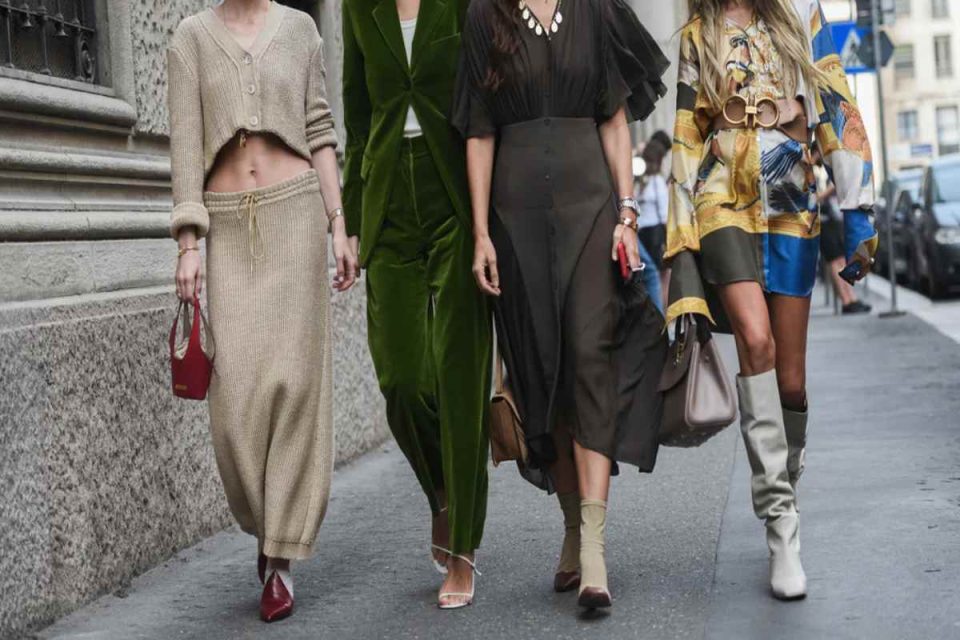
Clothing Style Is Not About Following Trends—It Is About Building a Functional Identity Through Intentional Choices in Fit, Color, and Context.
Most people think they “don’t have style.” The real problem is not nonexistence of sensitivity—it’s lack of construction. Without a system, spending becomes random, wardrobes become cluttered, and outfits feel inconsistent. This is why copying trends rarely works.
The direct answer: Clothing style is a decision-making framework. Once you understand how to align clothing with your lifestyle, body proportions, and daily environments, style becomes repeatable—not accidental.
Table of Contents
What Is Clothing Style?
Clothing style is the consistent visual language created by:
- Silhouette (how clothes shape your body)
- Color relationships
- Fabric weight and texture
- Context of use (work, social, climate)
Fashion changes.
Style stabilizes.
Think of fashion as software updates.
Style is your operating system.
Why Clothing Style Actually Matters
| Factor Partial | What It Earnings in Daily Life | Why It Happens (Behaviours Insight) |
| Perceived Competence | People often judge you as more capable or specialized founded on how you dress. | Clothing creates quick visual signals that the brain uses to assess credibility before discussion starts. |
| Self-assurance | Wearing well-chosen outfits can make you feel more prepared, focused, and confident. | When your appearance aligns with your role or goals, your mindset follows—this strengthens internal confidence. |
| Social Trust Signals | Others may feel more relaxed, respectful, or open toward you. | Familiar or context-appropriate clothing reduces uncertainty and builds subconscious trust. |
Your dress silently answers three questions people ask when they see you:
| Question | What Your Clothing Communicates |
| Are you reliable? | Structure, fit, condition |
| Do you understand context? | Occasion appropriateness |
| Do you know yourself? | Consistency |
Style is a smaller amount near amazing others and more about eliminating friction from daily decisions.
Main Clothing Style Types
Instead of aesthetic labels, categorize styles by life usage:
| Style Type | Built For | Core Pieces | Risk If Done Wrong |
| Minimal | Simplicity, professionals | Neutrals, clean lines | Looks plain instead of sharp |
| Classic | Timeless environments | Structured garments | Can feel outdated |
| Casual Functional | Daily mobility | Denim, knits | Can appear careless |
| Athleisure | Movement-heavy lifestyles | Stretch fabrics | Overuse outside context |
| Creative | Expression-focused roles | Layering, texture | Becomes costume-like |
Most people are not in one category—they are 70/30 blends.
How to Discover Your Personal Style
Step 1: Review Your Real Life
List where you actually spend time:
| Environment | Hours Per Week |
| Work | 45 |
| Commuting | 10 |
| Social | 8 |
| Outdoor/Errands | 12 |
Your wardrobe must match this reality—not Pinterest inspiration.
Step 2: Identify Your Body Geometry
Clothing must cooperate with structure:
- Shorter torso → Avoid long tops
- Broad shoulders → Reduce padding
- Lean frame → Add texture and layers
Organizations like the Fashion Institute of Technology (FIT) emphasize proportion as the core of visual harmony.
Step 3: Define a 3-Color Operating Palette
Use:
- 1 Base Neutral
- 1 Secondary Neutral
- 1 Accent Color
Example:
| Role | Color |
| Base | Navy |
| Secondary | Grey |
| Accent | Olive |
This creates automatic outfit compatibility.
Step 4: Build a Sectional Clothing
Think identical, not different fashions.
| Item Type | Quantity | Must Match With |
| Shirts | 5 | All trousers |
| Trousers | 3 | All shirts |
| Outerwear | 2 | Entire wardrobe |
| Shoes | 2–3 | Multi-use |
This “modular wardrobe” concept is widely used in sustainability discussions by organizations like the Ellen MacArthur Foundation.
Common Style Mistakes (And Why They Happen)
| Mistake | Why It Happens | Correction |
| Buying for fantasy life | Emotional shopping | Buy for weekly routine |
| Ignoring tailoring | Assuming size = fit | Adjust length & waist |
| Too many colors | No palette | Limit to 3–4 tones |
| Trend stacking | Seeking validation | Add one trend at a time |
Seasonal Dressing Strategy (India / US / UK Adaptable)
Climate should guide fabric, not fashion cycles.
| Season | What to Wear | Fabric Logic | Avoid |
| Summer | Lightweight shirts, breathable trousers | Cotton and linen allow airflow | Heavy denim |
| Rainy season | Quick-dry layers | Blends resist moisture | Dragging hems |
| Autumn | Layer-friendly pieces | Mid-weight fabrics | Bulky stacking |
| Winter | Structured outerwear | Wool retains heat | Thin synthetics |
Regional Note:
- India → prioritize breathability and wash durability.
- UK → layering is essential due to fluctuating temperatures.
- US → wider seasonal extremes demand fabric rotation.
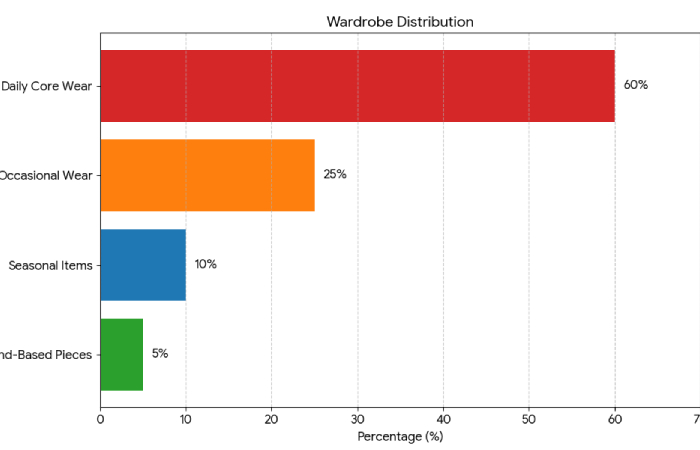
Visual Delivery of Wardrobe Usage (Realistic Closet Ratio)
How to Build Outfits Quickly
Every functional outfit includes:
- Foundation Layer – Fit-focused (shirt/trouser)
- Structure Layer – Defines shape (jacket/overshirt)
- Personality Layer – Small identity marker (watch/color/texture)
If all three layers compete, the outfit feels chaotic.
Clothing Style by Occasion
| Occasion | Priority | Example Approach |
| Work | Clarity | Structured neutrals |
| Travel | Comfort + durability | Stretch fabrics |
| Social | Relaxed precision | Soft tailoring |
| Formal | Authority | Clean silhouettes |
Style succeeds when it matches environmental expectations.
Trade-Offs Most Guides Ignore
- Minimal wardrobes require more maintenance discipline.
- High-quality fabrics cost more upfront but reduce replacement cycles.
- Personal style evolves—systems must adapt every 2–3 years.
There is no permanent “final wardrobe.”
Conclusion
Fashion style is not sensitive first—it is problem-solving first. When you align clothing with your lifestyle, proportions, and environment, confidence becomes a byproduct rather than a goal. Trends can enhance your clothes, but construction wears it. The people who appear “naturally stylish” are usually just following a system they may not even realize they built.
FAQ’s
How many clothes do I actually need?
Around 25–35 interchangeable pieces are enough for most lifestyles.
Is expensive clothing necessary for good style?
No. Fit, fabric weight, and coordination matter more than price.
How often should I update my style?
Review every 18–24 months as your lifestyle shifts.
Can I follow trends at all?
Yes—but treat trends as accessories, not foundations.
What is the biggest mistake beginners make?
Buying items individually instead of building compatibility.