

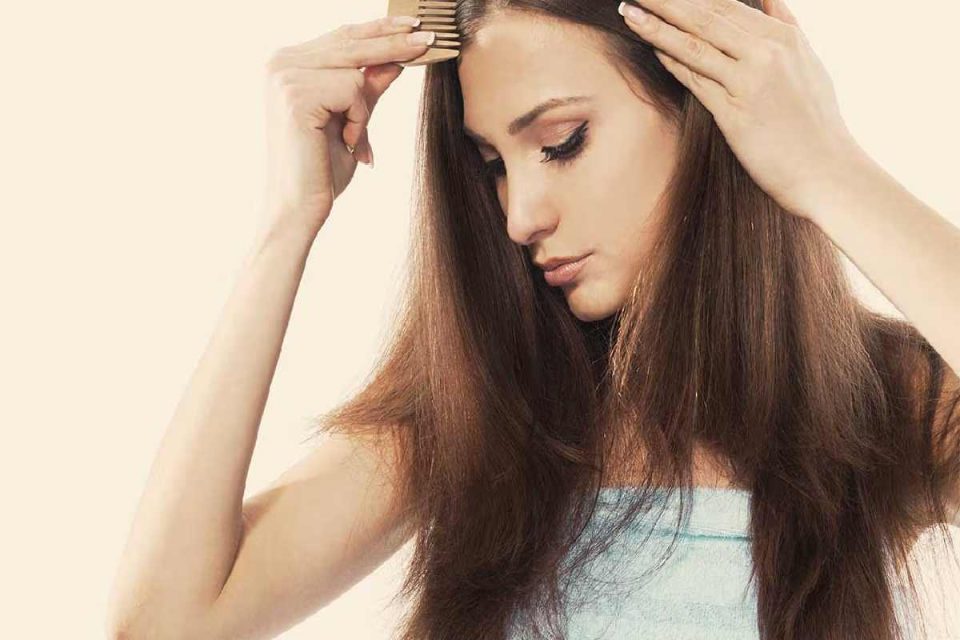
Frizz (noun & verb) refers to a mass of short, stiff, or tightly curled hairs that stand up or curl in a disorderly way. Frizz occurs when the outer layer of the hair (the cuticle) lifts, allowing moisture to move in and out too easily. This causes the hair shaft to swell and appear rough, puffy, or unkempt .
>Pronunciation: /frɪz/
As a noun: Frizzy hair or the condition of being frizzed.
Example: “Manic brushing will only cause frizz.”
As a verb: To form into small, tight curls or crisp tufts.
Example: “The humidity frizzed her hair.”
Table of Contents
How do you get rid of frizz? – Table
| Method | How It Works | Key Steps |
|---|---|---|
| Use Anti-Frizz Serum | Smooths the cuticle to lie flat and reduces friction | Apply a few drops of lightweight serum to damp or dry hair, focusing on mid-lengths and ends |
| Apply Leave-In Conditioner | Rehydrates hair strands and keeps moisture inside throughout the day | Spray or cream on damp hair after washing; helps detangle and seal cuticles |
| Blot Hair Dry (Don’t Rub) | Prevents friction that lifts the cuticle | Gently squeeze out water with a microfiber towel or soft cotton t-shirt |
| Rinse with Cold Water | Seals the cuticle so it lies flat | Final rinse in shower with cool water after conditioning |
| Use Heat Protectant | Prevents heat damage that worsens frizz | Apply before blow drying, curling, or straightening; protect up to 230°C |
| Sleep on Silk/Satin Pillowcase | Minimizes friction and helps retain moisture | Switch from cotton to silk or satin; also try loose braids overnight |
| Avoid Overwashing | Preserves natural oils that keep hair smooth | Wash 2-3 times per week; focus shampoo on scalp, condition ends every time |
| Apply Hair Oil as Final Step | Seals the cuticle and locks in moisture | Use 1-2 drops of argan, coconut, or jojoba oil after styling |
| Use Anti-Humidity Spray | Creates protective barrier against moisture in the air | Spray on dry hair after styling for humidity resistance |
Is frizz damaged hair? – Table
| Condition | Definition | Key Characteristics | Does it require repair? |
|---|---|---|---|
| Frizz (Dehydration) | Hair lacks moisture; cuticle is lifted but structure is intact | Feels dry and puffy but still has strength and stretch; responds well to leave-in conditioner and hydration | No – needs moisture, not structural repair |
| Damaged Hair | Hair structure is weakened; cuticle has gaps and protein loss | Feels rough, breaks easily, looks dull regardless of products; strand may snap when stretched | Yes – needs repair treatments with proteins and bonding agents |
| Dry Hair | Lacks moisture but cuticle may still be intact | Stiff, brittle texture; prone to breakage; lacks elasticity | No – needs hydration and conditioning |
| Porosity-Related Frizz | Hair absorbs and releases moisture too quickly due to lifted cuticle | Strand sinks quickly in water test; swells in humidity | Yes – needs cuticle-sealing products |
Key Takeaway: Frizz is usually dehydration, not always damage. If your hair has strength and stretch, focus on moisture. If it snaps easily or feels rough no matter what you apply, focus on repair first .
Frizzy hair treatment worldwide with best doctor and locations – Table
| Treatment Name | Clinic/Specialist | Location(s) | Key Features |
|---|---|---|---|
| Scalp Aging Treatment | Dr. TOUHI CLINIC (Dr. Aiko Isamu) | Tokyo, Japan | Targets root cause: scalp aging leads to distorted hair follicles causing curly/frizzy hair; combines medical treatment with daily scalp care |
| Cysteine Smoothing Therapy | Envi Salon (Namika Kant, Technical Expert) | India | Soft, controlled natural movement without altering texture; professional in-salon treatment |
| Hair Botox / Deep Repair Rituals | Various professional salons | Multiple locations worldwide | Hydration and frizz reduction without altering natural texture |
| Nanoplastia Therapy | Advanced hair clinics | Europe, Asia, Americas | Long-lasting humidity resistance with natural finish; no harsh chemicals |
| Keratin Smoothing Treatment | Professional salons | Worldwide | Refined, polished results for straight to wavy hair; lasts several months |
| Deep Hydration Rituals | Professional salons | Worldwide | Restores moisture balance and prevents frizz at the source |
Important Note: When considering chemical smoothing treatments, ask about ingredients and safety standards. Some treatments may contain or release formaldehyde or related chemicals, which can irritate eyes, skin, and lungs .
Frizzy hair treatment products – Table
| Product Category | Product Name | Key Ingredients | Best For | Price Range |
|---|---|---|---|---|
| Shampoo | Moroccanoil Frizz Control Shampoo | Argan oil, jackfruit extract, amaranth oil | Coarse, frizz-prone hair | $ (Budget-friendly options available from L’Oreal EverPure at $10) |
| Shampoo | Miriam Quevedo Black Baccara Shampoo | Black Baccara rose, vegan keratin, vitamins, coconut oil | Thin, brittle hair | $$$ |
| Conditioner | Moroccanoil Frizz Control Conditioner | Argan oil, jojoba oil, sunflower seed oil | All frizz-prone types | $$ |
| Leave-In Conditioner | Briogeo Farewell Frizz Leave-In Conditioner | Rosehip, argan, coconut oils, vitamin E | Curly, wavy hair | $$ |
| Leave-In Cream | Mizani 25 Miracle Leave-In Cream | UV-protection, detangling agents | All types; offers UV protection | $$ |
| Hair Oil / Serum | Verb Ghost Oil | Weightless argan oil formula | All types; won’t weigh hair down | $$ |
| Hair Oil / Serum | Kerastase Gloss Absolu Anti-Frizz Oil Drops | Anti-frizz oil blend | Thick, dense curls | $$$ |
| Hair Oil / Serum | IGK Good Behaviour Anti-Frizz Serum | Smoothing polymers | Adds mirror-like shine | $$ |
| Styling Cream | Not Your Mother’s Curl Talk Creme | Curl-defining formula | Curly hair; budget option | $ |
| Styling Cream | R+Co Zipper Multi-Tasking Styling Lotion | Multi-tasking formula | Dry, split ends | $$ |
| Anti-Frizz Spray | Oribe Imperméable Anti-Humidity Spray | Humidity-shielding formula | All types; luxury option | $$$ |
| Anti-Frizz Spray | Maria Nila Gloss Coat | Heat protection up to 230°C | All types; adds shine | $$ |
| Hair Mask | Vollie Super Soft Hair Mask | Ceramides, vegan collagen | Weekly deep treatment | $$ |
| Heat Protectant Cream | Briogeo Farewell Frizz Blow Dry Perfection Crème | Rosehip, argan, coconut oils | For blowouts; decreases frizz 48 hours | $$ |
| Air Dry Balm | Alterna Caviar Anti-Aging Smoothing Balm | Caviar extract, antioxidants, omega-3s | For air-drying natural texture | $$ |
Price Key: $ = under $15, $$ = $15-$40, $$$ = over $40
Conclusion
Frizz is a common hair concern that occurs when the cuticle lifts, allowing moisture to enter the hair shaft and cause swelling. While often mistaken for damage, frizz is typically a sign of dehydration rather than structural damage . The good news is that frizz is highly manageable with the right approach.
Key takeaways:
- Hydration is your first line of defense – Use leave-in conditioners and anti-frizz serums to lock in moisture
- Gentle handling prevents frizz – Blot don’t rub, use wide-tooth combs, and sleep on silk pillowcases
- Different hair types need different solutions – Straight hair needs lightweight products, curly hair needs deep hydration, and chemically treated hair needs repair-focused care
- Professional treatments are available worldwide – From scalp-focused clinics in Japan to smoothing therapies in India, options exist for long-term frizz management
- Consistency matters more than expensive products – A steady routine of proper washing, conditioning, and protection beats occasional “miracle” fixes
If your hair suddenly becomes unusually dry, brittle, or frizzy without changes in routine, or if you notice scalp symptoms like itching or hair loss, consult a dermatologist .
FAQs
1. Can frizz be permanently cured?
No, frizz cannot be permanently cured because it is influenced by genetics, humidity, and daily habits. However, it can be effectively managed with consistent care routines, proper products, and occasional professional treatments .
2. Is coconut oil good for frizzy hair?
Yes. Coconut oil can penetrate the hair shaft and reduce protein loss when used as a pre-shampoo treatment. Apply 1-2 teaspoons to dry hair 30-60 minutes before washing. Fine hair may prefer lighter oils like argan or jojoba .
3. How often should I wash frizzy hair?
Most people with frizz-prone hair do well washing 2-3 times per week. Focus shampoo on the scalp and condition the ends every time you wet your hair. Overwashing strips natural oils that keep hair smooth
4. Does heat styling make frizz worse?
Yes, excessive heat styling damages the cuticle, increases porosity, and makes hair more prone to frizz. Always use a heat protectant, keep tools on the lowest effective setting, and give your hair heat-free days .
5. What ingredients should I look for in anti-frizz products?
Look for moisturizing ingredients like shea butter, argan oil, coconut oil, panthenol, glycerin, and jojoba oil. Also seek keratin, silk proteins, marine collagen, and ceramides for repair and smoothing.
6. Is frizz worse in certain weather?
Yes. Humidity causes hair to absorb moisture from the air, swelling the cuticle and creating frizz. In dry climates, lack of moisture also causes frizz. Use anti-humidity sprays in humid weather and leave-in conditioners in dry climates.
7. Can diet affect frizz?
A balanced diet supports overall hair health, but external care matters most for frizz control. Ensure adequate protein, iron, zinc, and vitamins, then focus on proper cleansing, conditioning, and protection for day-to-day management.
>8. Are sulfate-free shampoos better for frizz?
Yes, sulfate-free formulas are milder and less stripping, which helps dry or color-treated hair feel smoother. However, the best shampoo is one that your scalp tolerates, and that doesn’t leave your hair feeling rough.